
Roof maintenance is easier and safer when the right tools are used for the task. For households in Lake View, NY, a basic toolkit should support seasonal inspections, gutter cleaning, minor debris removal, moisture checks, and safe observation from the ground or a properly positioned ladder.
The goal is not to perform complex roof repairs without training. It is to identify developing problems early, keep drainage paths clear, and recognize conditions that require specialized equipment or professional attention.
What tools are useful for a basic roof inspection?
A basic inspection can usually begin from the ground. Binoculars, a flashlight, a notebook, and a camera or phone help document visible changes without requiring anyone to walk on the roof.
Useful inspection tools include:
- Binoculars for viewing shingles, flashing, vents, and roof edges
- A flashlight for attic spaces, soffits, and dim areas near roof penetrations
- A measuring tape for checking the approximate size of visible damage
- A notebook or digital record for comparing conditions from season to season
- A camera for documenting lifted shingles, stains, moss, or damaged metal
- A small inspection mirror for viewing areas that are difficult to see directly
Look for missing or displaced shingles, exposed underlayment, bent flashing, damaged vent covers, sagging roof lines, and dark areas that may indicate moisture. Inside the attic, check for damp insulation, water marks, daylight showing through the roof deck, or a musty odor.
A photograph is often more useful than memory. Seasonal records can help show whether a small issue is stable or becoming larger.
Which tools help with gutters and downspouts?
Gutters and downspouts are part of the roof drainage system, so they deserve attention during routine maintenance. Leaves, twigs, ice, and roof granules can restrict water flow and cause overflow near fascia boards, siding, windows, and foundations.
Common gutter-cleaning tools include:
- Work gloves with a durable, water-resistant surface
- A small plastic scoop designed for removing wet debris
- A sturdy bucket or debris bag
- A garden hose with a spray nozzle
- A downspout-cleaning attachment or flexible plumbing snake
- A soft-bristle brush for clearing residue from gutter interiors
- A ladder stabilizer and ladder leveler when compatible with the ladder
Avoid using sharp metal tools that can scratch or puncture aluminum gutters. A hose can help confirm that water flows through the entire system, but it should be used carefully so water is not directed beneath shingles or into roof vents.
Downspouts should discharge water away from the foundation. Extensions may be useful where water collects near basement walls, crawl spaces, walkways, or areas that freeze and become slippery.
Do homeowners need roofing tools for shingle maintenance?
Most homeowners do not need a large collection of specialized roofing tools for routine observation. A few hand tools can help with simple ground-level tasks, but shingle work becomes more hazardous as soon as climbing or roof walking is involved.
For limited maintenance near the roof edge, useful items may include:
- A pry bar for removing small pieces of loose material, only when the work can be done safely from a stable position
- A utility knife with a retractable blade for cutting roofing-related materials
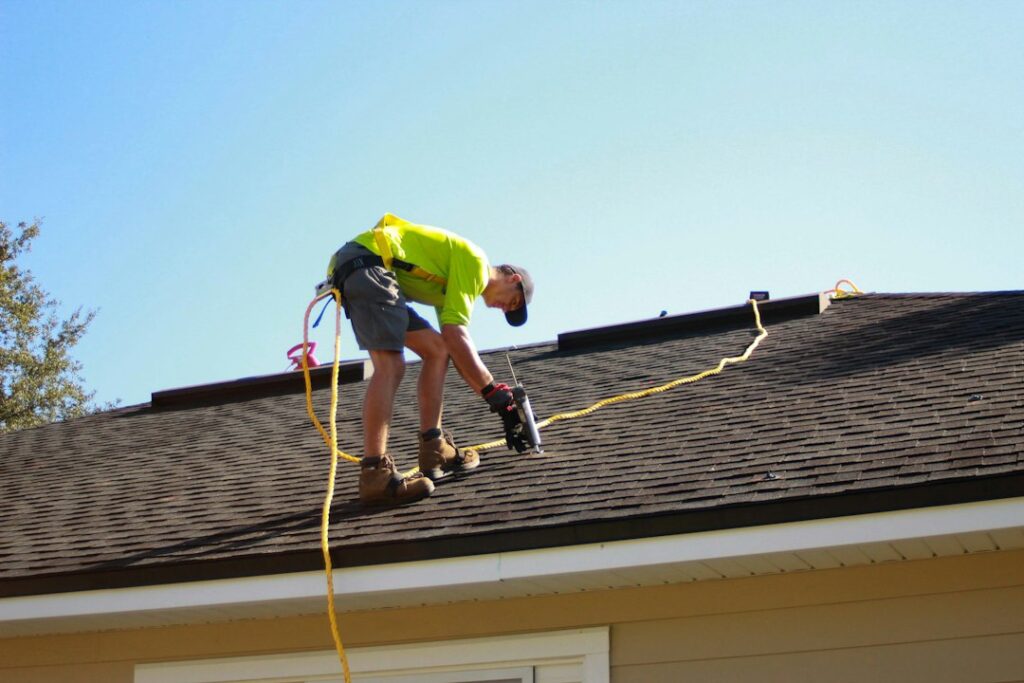
- A caulking gun for approved exterior sealants
- A hammer for minor non-structural work
- Replacement fasteners appropriate for the material being repaired
- A soft broom or roof rake designed for the roof surface
A roof rake can be helpful after heavy snow, but it should be used from the ground and according to the roof material manufacturer’s guidance. Pulling aggressively can remove protective granules or damage shingles.
Do not use ordinary household caulk as a substitute for proper flashing repair. Sealants can temporarily close a visible gap while leaving the underlying water path unresolved.
What safety equipment is essential?
Safety equipment is more important than having a large tool collection. Falls from roofs and ladders can cause severe injuries, particularly when surfaces are wet, icy, moss-covered, or unstable.
Basic safety equipment includes:
- Slip-resistant work footwear
- Cut-resistant gloves
- Safety glasses
- A hard hat when working below overhead materials or during debris removal
- A properly sized extension ladder
- A ladder stabilizer or stand-off attachment
- A three-point climbing method, keeping two hands and one foot or two feet and one hand in contact
- A spotter on the ground when ladder work is unavoidable
Never climb onto a roof covered with snow, frost, rain, or ice. Wind can also make ladders, loose materials, and long-handled tools difficult to control. Power lines, tree branches, and nearby structures must be considered before positioning a ladder.
Roof harnesses are not a simple guarantee of safety. They require suitable anchor points, correct setup, and an understanding of fall clearance. A harness attached to an improper anchor can create a false sense of security.

Which tools can detect moisture problems?
Water may travel along rafters, roof decking, insulation, and wall cavities before appearing as an interior stain. Moisture-detection tools can help identify suspicious areas, but their readings need to be interpreted carefully.
A basic moisture-checking kit may include:
- A non-invasive moisture meter
- A bright flashlight
- An infrared thermometer for spotting temperature differences
- A mirror for examining the underside of roof decking
- Disposable gloves and protective eyewear
- A small inspection probe used only where appropriate and safe
Moisture meters can produce unusual readings near metal fasteners, wiring, plumbing, or dense building materials. An elevated reading does not automatically identify the source of a leak. Condensation, plumbing leaks, ice-related damage, and roof openings can create similar symptoms.
Check the attic after heavy rain, strong wind, or a rapid change from freezing to thawing conditions. Water stains that grow, insulation that remains wet, or active dripping deserve prompt attention.
Are power tools necessary for roof maintenance?
Power tools are rarely necessary for routine roof care. Cordless drills, reciprocating saws, and grinders can create additional hazards around ladders, roofing membranes, metal flashing, electrical wiring, and hidden structural components.
A cordless drill may be useful for ground-level gutter or trim work when the correct fasteners are known. However, power tools should not be used on a roof surface unless the operator has the appropriate training, footing, protective equipment, and work setup.
For most households, manual tools are sufficient for clearing debris, inspecting visible conditions, testing downspout flow, and recording damage.
What should be kept in a seasonal roof-maintenance kit?
A practical kit can remain compact. Store tools in a dry container and inspect safety equipment before each use.
A useful seasonal kit may contain:
- Binoculars
- Flashlight and spare batteries
- Work gloves
- Safety glasses
- Camera or phone
- Measuring tape
- Plastic gutter scoop
- Bucket or debris bag
- Hose nozzle
- Soft brush
- Moisture meter
- Ladder inspection checklist
- Roof-safe snow rake, if appropriate for the property
In Lake View, NY, seasonal changes can place repeated stress on roofing materials, gutters, and flashing. Wind, snow, ice, and freeze-thaw movement make it useful to inspect drainage and visible roof conditions in spring and fall, as well as after severe weather.
Tools can help identify a problem, but they cannot always establish its cause. Sagging roof areas, exposed decking, widespread shingle loss, active leaks, damaged electrical components, unstable ladders, and ice-covered surfaces are situations where climbing or repair work should not be attempted casually.
