
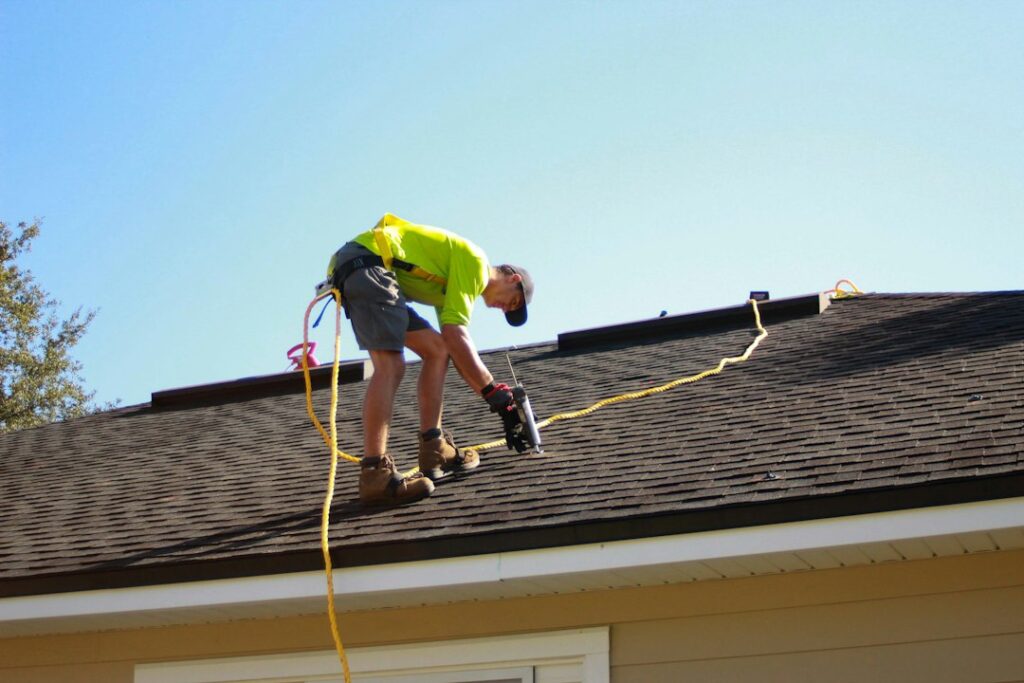
Roof work can look simple from the ground, but even a small repair involves fall hazards, unstable surfaces, weather exposure, hidden structural damage, and the possibility of making a leak worse. For residents of Lake View, NY, seasonal snow, ice, wind, moisture, and changing temperatures add another layer of concern.
The safest approach is to match the project to the conditions, the roof design, and the tools and safety equipment available. Some ground-level maintenance tasks may be reasonable for a careful homeowner. Work that requires walking on the roof, altering roof materials, or protecting against a fall may not be suitable as a do-it-yourself project.
What roof work is usually reasonable for a homeowner?
Minor tasks may be manageable when they can be completed from the ground or from a properly positioned ladder without stepping onto the roof.
Examples include:
- Looking at shingles, flashing, gutters, and downspouts from ground level
- Removing small amounts of loose debris with a tool that can be used from a safe position
- Cleaning accessible gutters from a securely placed ladder
- Replacing a small section of gutter or downspout at ground level
- Sealing a visible, minor gap around a vent pipe or flashing detail when the area can be reached safely
- Photographing suspected damage for later evaluation
A project becomes less suitable for self-performance when it requires climbing onto a sloped surface, carrying bulky materials, removing multiple layers of roofing, cutting sheathing, or working near electrical equipment.
A useful rule is this: if the task cannot be completed while maintaining three points of contact and keeping both feet on a stable surface, it deserves additional caution or a different method.
When is it safe to work on a roof?
Roof work is safest during dry, calm, mild weather, with good visibility and a completely dry surface. The roof should be free of snow, frost, ice, dew, and loose granules.
Avoid roof work during or soon after:
- Rain or snowfall
- Freezing temperatures that may leave a slick surface
- Strong or gusty wind
- Thunderstorms or nearby lightning
- Rapid temperature changes that create condensation or frost
- Extreme heat that can soften roofing materials and cause heat stress
In the Lake View area, a roof may appear clear while shaded sections still hold ice. Meltwater can also refreeze near eaves, valleys, and gutters. A sunny afternoon does not automatically make a winter roof safe.
Roofing materials can also behave differently depending on temperature. Asphalt shingles may become brittle in cold weather and unusually soft in high heat. Walking on them can loosen granules, break sealing strips, or cause hidden damage even when no immediate problem is visible.
Can a homeowner safely walk on a sloped roof?
For many homeowners, walking on a sloped roof is the point where a routine repair becomes a serious fall hazard. Even a modest slope can be difficult to cross safely, particularly when the surface is damp, covered in algae, aged, granular, or uneven.
Risks increase when the roof has:
- A steep pitch
- Multiple levels or intersecting roof sections
- Skylights or fragile roof panels
- Loose or curling shingles
- Valleys where water and debris collect
- Nearby overhead utility lines
- Limited space for ladder placement
- A height of roughly one story or more above the ground
A fall-arrest harness is not automatically a complete safety system. It requires a suitable anchor, compatible equipment, proper setup, and enough clearance to prevent striking a lower surface. Improvised attachment to a vent, chimney, gutter, or plumbing pipe can fail.
If the only plan is to climb onto the roof while carrying tools and “be careful,” the project does not have an adequate fall-protection system.
Is ladder work safer than roof work?
A ladder can reduce some risks, but it introduces others. Many roof injuries occur during climbing, stepping from the ladder onto the roof, or descending while carrying materials.
Before using a ladder:
- Set it on firm, level ground.
- Keep the base clear of mud, ice, snow, and clutter.
- Use the correct ladder length rather than standing on the top steps.
- Keep the ladder away from overhead power lines.
- Secure the ladder so it cannot slide or shift.
- Face the ladder while climbing.
- Keep both hands available by using a tool belt or rope system.
- Do not move or “walk” the ladder while standing on it.
A ladder should not be used as a substitute for fall protection on a roof. It is an access tool, not a guarantee that roof work is safe.
What roof repairs should usually not be DIY projects?
Several jobs require more than basic maintenance knowledge because a mistake can affect the building envelope or structural safety.
Avoid treating these as casual homeowner projects:
- Replacing large sections of shingles
- Repairing areas around chimneys, skylights, or roof-to-wall intersections
- Replacing damaged roof decking
- Working on a roof with visible sagging
- Repairing storm damage near electrical equipment
- Removing heavy snow or ice from a roof
- Working on metal roofing that may be slippery
- Cutting into a roof to install a vent, pipe, or skylight
- Handling suspected mold, rot, or extensive water damage
- Repairing a roof after a tree impact

A sagging roof, bowed ceiling, cracking interior drywall, or doors that suddenly stick may indicate a structural problem rather than a simple leak. Entering an attic beneath a damaged roof can also be hazardous if insulation, wiring, or weakened framing is present.
How can someone inspect a roof without climbing onto it?
A ground-level inspection can reveal useful information without creating unnecessary fall exposure.
Use binoculars or a phone camera with zoom to look for:
- Missing, lifted, or curled shingles
- Dark areas that may indicate exposed underlayment
- Damaged metal flashing
- Sagging gutters
- Granules collecting near downspouts
- Stains on fascia or soffits
- Debris gathered in valleys
- Tree limbs touching the roof
- Water stains or damp insulation in an accessible attic
Inside the home, inspect ceilings and upper walls after rainfall. A leak may appear several feet away from the actual entry point because water can travel along rafters, roof decking, or insulation.
Do not assume a small stain means a small roof problem. The visible mark may be the final point where water emerges.
What local and legal issues should be checked first?
Roof work may be affected by local building requirements, permit rules, waste-disposal rules, and property or insurance conditions. Requirements can depend on whether the project is a repair, replacement, structural alteration, or emergency stabilization.
Before changing roof structure or installing new openings, check the applicable local requirements. Also review homeowner insurance instructions after storm damage, especially before discarding damaged materials or making extensive repairs.
Even when a permit is not required, the work still needs to protect occupants and the building. Keep people and pets away from the area below, since shingles, nails, tools, and broken materials can fall unexpectedly.
What is the safest decision rule?
DIY roof work is most reasonable when the task is minor, the work area is low-risk, the weather is stable, the surface can be reached without walking on a sloped roof, and the person performing it has the right equipment and enough experience.
Stop and reassess if:
- The roof is wet, icy, windy, or unusually hot.
- A ladder cannot be placed securely.
- Fall protection is needed but unavailable.
- The roof feels soft, shifts, or sags.
- The repair area is larger than expected.
- Water is entering near electrical wiring.
- The source of the leak cannot be identified.
- The work requires carrying large or heavy materials at height.
The safest roof project is not necessarily the one that can be completed fastest. It is the one where the hazards are understood before anyone climbs, the limits of the repair are clear, and no one has to improvise once work begins.
