
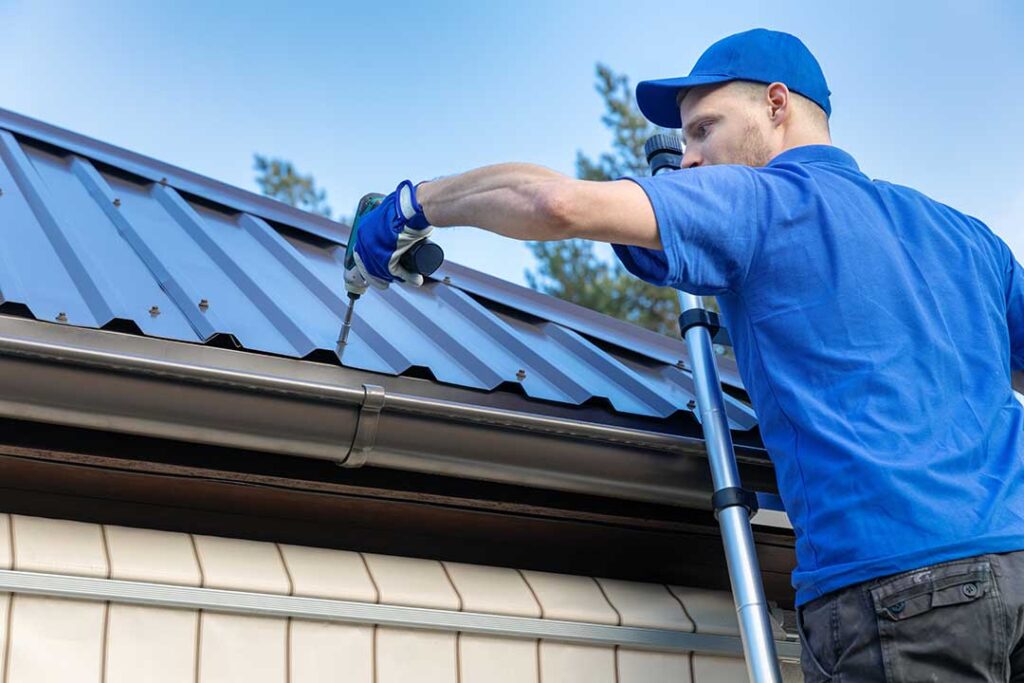
Replacing a roof is a major household expense, and the best financing choice depends on the urgency of the work, available savings, home equity, credit profile, and ability to manage monthly payments. Residents in Lake View, NY may also need to plan around winter weather, wind, ice, and seasonal scheduling, which can make delaying a failing roof more costly if leaks spread into insulation, ceilings, or framing.
What should be decided before applying for financing?
Start by separating the necessary roofing work from optional upgrades. A written scope should identify whether the project involves:
- Full roof replacement or limited repairs
- Replacement of underlayment, flashing, or ventilation components
- Removal and disposal of existing roofing
- Repairs to sheathing or water-damaged areas
- Required permits or inspections
- Gutter, chimney, skylight, or ice-related work
The amount borrowed should reflect the complete project cost, not just the visible roofing material. A low initial figure may increase after damaged decking or flashing is uncovered.
It is also useful to compare the total repayment cost rather than focusing only on the monthly payment. Important terms include the annual percentage rate, loan length, origination charges, prepayment rules, late fees, and whether the rate can change. HUD advises homeowners to understand loan costs, repayment requirements, and service charges before proceeding with improvements. ([hud.gov](https://www.hud.gov/hud-partners/single-family-fixing-home?utm_source=openai))
Is paying cash a reasonable option?
Cash avoids interest and loan fees, but using every available dollar can leave a household without reserves for heating problems, insurance deductibles, property taxes, or other emergencies. A practical approach may be to use part of savings while financing the remaining balance, provided the household retains an emergency fund.
Cash also makes it easier to respond quickly when a roof has active leaks. However, the decision should account for the roof’s full expected cost, including disposal, structural repairs, and related exterior work.
How does a home improvement loan work?
A personal home improvement loan is usually an unsecured installment loan. The borrower receives a lump sum and repays it through scheduled monthly payments over a set term.
This option may be suitable when:
- Home equity is limited
- The homeowner does not want the roof tied directly to the house as collateral
- A predictable payment is preferred
- The project cost is known in advance
Because the loan is not secured by the home, the interest rate may be higher than the rate on some home equity products. Approval and pricing commonly depend on income, credit history, existing debts, and loan amount.
A fixed-rate installment loan can make budgeting easier, especially for households managing seasonal expenses. The tradeoff is that extending repayment over more years may lower the monthly payment while increasing the total interest paid.
Should a homeowner use a home equity loan?
A home equity loan provides a lump sum secured by the home. The amount available generally depends on the property’s value, the existing mortgage balance, lender requirements, and the borrower’s finances. The interest rate is often fixed, but fees and closing costs can apply. If the loan cannot be repaid, the home may be at risk of foreclosure. ([consumerfinance.gov](https://www.consumerfinance.gov/ask-cfpb/what-is-a-home-equity-loan-en-106/?utm_source=openai))
This type of financing can make sense when the replacement cost is substantial and the homeowner has adequate equity and stable income. It may be less suitable when:
- The home may be sold soon
- Income is uncertain
- The borrower already has significant mortgage or consumer debt
- The payment would leave little room for winter utility or maintenance costs
A home equity loan should be evaluated as a second secured debt, not as an extension of ordinary household cash flow.
What is a HELOC, and how is it different?
A home equity line of credit, or HELOC, is a revolving credit line secured by the home. Instead of receiving the entire amount at once, the borrower can generally draw funds as needed during a borrowing period.
A HELOC may be useful when the final cost is uncertain because hidden damage could be found after old roofing is removed. However, many HELOCs have variable interest rates, so monthly payments can rise. Payments may also increase when the draw period ends and the account enters repayment. The Consumer Financial Protection Bureau warns that a lender may reduce or freeze access to the line under certain financial or property-value conditions, and failure to repay can put the home at risk. ([consumerfinance.gov](https://www.consumerfinance.gov/ask-cfpb/what-is-a-home-equity-line-of-credit-heloc-en-107/?utm_source=openai))
For a straightforward roof replacement with a known contract amount, a fixed installment loan may be easier to budget than a variable-rate line of credit.
Are FHA financing programs available for roof work?
HUD’s Title I Property Improvement Loan program is designed to help finance repairs and improvements through participating lenders. HUD explains that these loans can be used for materials and labor, and that they may be considered when a homeowner has limited equity. Loan terms, approval standards, and interest rates are set through the lender rather than being automatically subsidized by FHA. ([hud.gov](https://www.hud.gov/hud-partners/single-family-fixing-home?utm_source=openai))
An FHA 203(k) mortgage is generally associated with a home purchase or broader rehabilitation project rather than an ordinary stand-alone roof replacement. It may be relevant when the roof is part of a larger renovation or when repairs are being financed during a purchase or refinance, but eligibility and project administration requirements can be more involved. ([hud.gov](https://www.hud.gov/hudprograms?utm_source=openai))
What about contractor-arranged financing or promotional offers?
Some roofing agreements may present financing at the time of contracting. The homeowner should determine whether the financing comes from a separate lender, whether the interest rate is deferred or genuinely low, and what happens if payments are late.
Questions worth asking include:

- Is the advertised rate temporary?
- Is there deferred interest that can be charged later?
- Are there application, account, or origination fees?
- Is the financing secured by the home?
- Does the contract require payment before all work is completed?
- What happens if additional roof damage is discovered?
The financing agreement and roofing contract should be read separately. A convenient application process does not necessarily mean the loan has the lowest total cost.
Are PACE loans appropriate for a roof replacement?
Property Assessed Clean Energy, or PACE, financing is generally associated with energy-related improvements and is repaid through property tax assessments. The CFPB cautions that PACE payments can increase the property tax bill, may involve fees and interest, and can create serious consequences if the assessment becomes delinquent. ([consumerfinance.gov](https://www.consumerfinance.gov/ask-cfpb/i-am-considering-a-pace-loan-for-home-improvements-what-should-i-keep-in-mind-before-signing-up-en-2128/?utm_source=openai))
Because a standard roof replacement is not automatically the same as an energy-efficiency improvement, eligibility should never be assumed. The homeowner should verify the exact terms, repayment priority, effect on refinancing or selling, and whether the financing is available for the proposed work.
Can roof financing interest be deducted on taxes?
Tax treatment depends on the loan, how the funds are used, whether the debt is secured by the home, and whether the homeowner itemizes deductions. IRS guidance states that interest on a home equity loan or line of credit may be deductible, subject to applicable limits, when the proceeds are used to buy, build, or substantially improve the residence. A new roof is listed by the IRS as an example of a substantial home improvement. ([irs.gov](https://www.irs.gov/publications/p530?utm_source=openai))
That does not mean every roofing loan produces a tax deduction. Keep loan documents, invoices, proof of payment, and records showing how the money was used. Tax rules can change, so a tax adviser should address the homeowner’s individual situation.
What is a sensible comparison process?
Before selecting financing, compare at least these figures:
- Total project price
- Amount paid from savings
- Amount borrowed
- Annual percentage rate
- Monthly payment
- Total interest and fees
- Fixed or variable rate
- Loan term
- Consequences of late payment
- Whether the home secures the debt
For households in the area, timing also matters. A roof that is marginal in dry weather may perform poorly after repeated freeze-thaw cycles, wind, or heavy snow. Financing should support a necessary repair without creating a payment that is difficult to maintain through the entire year.
A useful rule is to choose the shortest affordable repayment period that leaves enough room for ordinary household reserves. The lowest monthly payment is not always the least expensive choice.
